
Venus
Williams
Redefining resilience and excellence on and off the tennis court

The Roots
Born in Lynwood, California, Venus Williams grew up in Compton, a neighborhood with limited sports facilities. Her parents, Richard Williams and Oracene Price, recognized early her potential and began coaching her along with her sister Serena. Despite the modest surroundings and little access to elite tennis infrastructures, her parents dedicated themselves to providing structured training at home and sought opportunities to compete in junior tournaments. This nurturing environment laid the foundation for her competitive spirit and discipline.
The Struggle
Venus faced the pressure of overcoming social and environmental barriers as a young African American girl in a sport largely dominated by white athletes. Early in her career, she dealt with skepticism from tennis insiders and witnessed a lack of access to certain training and competitive circuits reserved for more privileged players. Balancing school, intense training schedules, and the expectations from a family determined to break new ground added additional layers to her journey. Her breakthrough was not instant; initial appearances in professional tournaments required tenacity as she gradually established her place among the elite.
"I don't focus on what I'm up against. I focus on my goals and I try to ignore the rest."
The Turning Point
The 1997 US Open marked a turning point when 17-year-old Venus reached the semifinals, signaling her arrival on tennis’s biggest stages. However, it was in 2000 when she won her first Grand Slam singles title at Wimbledon that her journey took a defining shape. This victory challenged stereotypes and underscored her emergence as a formidable force in women’s tennis. The win was not only a tennis milestone but an emotional moment representing the triumph of years of family sacrifice and unrelenting commitment.
The Rise
Following her breakthrough at Wimbledon, Venus solidified her standing by winning multiple Grand Slam singles titles and excelling in doubles events alongside her sister Serena. Her playing style combined power, athleticism, and strategic intelligence, reshaping women's tennis into a more dynamic sport. Venus navigated periods of injury setbacks and public pressure yet maintained consistency through disciplined training and mental resilience. She also embraced leadership roles on the court as she inspired players with her trailblazing path. Her sustained impact went beyond victories; she contributed to increasing visibility for women’s tennis and championed equal prize money.
Turned professional at age 14
Reached US Open semifinals as a teenager
Won first Grand Slam singles title at Wimbledon
Became world No. 1 player in women's singles rankings
Achieved Olympic gold medals in singles and doubles
Diagnosed with Sjögren's syndrome, managed career through illness
Reached Wimbledon singles final after health struggles
Selected to compete at Tokyo Olympics, demonstrating longevity
What are Venus Williams’ most notable achievements?
Venus Williams has won 7 Grand Slam singles titles, 14 Grand Slam doubles titles with Serena Williams, and 2 Olympic gold medals. She also became the world No. 1 in women’s singles rankings.
How did Venus Williams manage her career after her diagnosis of Sjögren's syndrome?
After being diagnosed in 2011, Venus adapted her training and competition schedule while focusing on health management, allowing her to return to top-level tennis and compete in Grand Slam finals.
Who played a significant role in Venus Williams' early development in tennis?
Her parents, Richard Williams and Oracene Price, were critical to her early training and development, coaching her and supporting her journey from a young age.
What is Venus Williams known for beyond her tennis career?
Venus is recognized for her advocacy for equal prize money in tennis, her contributions to women’s health awareness, and her role in inspiring young athletes globally.
Trending Stories

Taylor Fritz
Born on October 28, 1997, in Rancho Santa Fe, California, Taylor Fritz seemed destined for tennis greatness. His parents, Kathy May, a former top-10 tennis player, and Guy Fritz, a successful tennis coach, provided a solid foundation for his future career. However, being born into a tennis family didn’t mean Taylor’s path was smooth. He faced significant challenges, both physically and mentally, that would test his determination and willpower. Despite his natural talent, Taylor had to deal with the immense pressure of living up to his family’s legacy. Many expected him to rise quickly through the ranks, but tennis is not just about talent; it requires relentless hard work, mental toughness, and the ability to adapt. Taylor's early career was filled with ups and downs as he struggled with consistency and injury setbacks. At just 17, Taylor began competing on the professional circuit, a significant achievement, but his journey was far from easy. The pressure to perform weighed heavily on him, and it showed in his early matches. He often had to deal with the frustration of injuries and struggled to maintain the mental strength required to compete at such a high level. This period of uncertainty in his career could have derailed him, but Taylor’s perseverance kept him moving forward. One of the biggest challenges came in 2019 when Taylor Fritz suffered a knee injury that could have ended his career. It was a tough time for him as he was rising in the ATP rankings, and this setback came as a huge blow. But instead of letting the injury defeat him, Taylor focused on rehabilitation and mental toughness. His dedication to getting back on the court was inspiring, and within months, he made his comeback. The support from his parents was instrumental during this time. His mother, Kathy, provided emotional support and invaluable tennis advice, while his father helped him navigate his recovery and return to the sport stronger than ever. Fritz’s resilience and his ability to push through the pain and frustration of his injuries showed his true character. Taylor's breakthrough moment came in 2022 when he won the Indian Wells Masters, defeating none other than Rafael Nadal in the final. This victory marked a turning point in his career, establishing him as one of the top players on the ATP Tour. The win was not just a reflection of his improved skills but also of his ability to remain mentally strong under pressure. His work with coach Paul Annacone, who had previously coached greats like Pete Sampras and Roger Federer, helped him refine his game and focus on his strengths. Annacone’s guidance, along with Fritz’s growing maturity, allowed him to break through the mental barriers that had held him back earlier in his career. Taylor Fritz continues to solidify his position as a top player in men’s tennis. He’s now ranked in the top 10 in the world and is consistently competing in Grand Slam tournaments. His recent performances in the 2023 US Open saw him advance to the quarterfinals, showcasing his improved game and mental toughness. Fritz’s journey from a young, struggling athlete to one of the best in the world is a testament to his resilience, hard work, and unwavering belief in himself. Taylor Fritz’s story is a powerful reminder that success is not always a straight path. Even with talent and the best support systems, challenges like injuries, self-doubt, and immense pressure can derail an athlete’s career. However, with perseverance, the right guidance, and mental strength, it is possible to overcome any obstacle. Fritz's journey is an inspiration not just for tennis players but for anyone facing difficulties in their chosen path. His story teaches us that setbacks are temporary and that the will to keep pushing forward can lead to extraordinary achievements.

Jack Draper
Jack Draper, born on December 22, 2001, in Sutton, England, has become one of the most promising young talents in the world of tennis. Son of Roger Draper, a former CEO of the Lawn Tennis Association, and Nicky Draper, a former junior tennis champion, Jack was destined for the tennis court from an early age. However, his journey has been anything but smooth. Through perseverance, a relentless drive to succeed, and support from key people in his life, Jack Draper has managed to rise above injuries and setbacks to solidify his place as an emerging tennis sensation. Growing up in a family deeply entrenched in the world of sports, Jack was introduced to tennis at a very young age. His father, Roger Draper, played a vital role in shaping his career by providing him with the best opportunities in tennis. Meanwhile, his mother, Nicky, served as an inspiration, having achieved success in the sport herself. However, despite these advantages, Jack had to forge his own path in the highly competitive world of professional tennis. Jack Draper’s journey to becoming a top tennis player was filled with challenges, the biggest of which was his health. At the age of 16, he began facing issues with his physical endurance and fitness, which culminated in severe cramps and breathing problems during matches. His most public struggle came in 2021, at the Miami Open, where he collapsed on the court due to heat exhaustion. Adding to his physical challenges, Draper struggled with pressure and expectations that came with being a highly-touted player from a sporting family. Injuries also plagued his early career, with Draper suffering frequent muscle strains, particularly in his thighs and back. These setbacks were hard to bear for a young player with immense potential. Jack Draper’s success today is a testament to his resilience. Determined not to let injuries define his career, he worked diligently with a team of coaches and fitness experts to rebuild his body and increase his stamina. One of the pivotal figures in his journey was James Trotman, his coach, who helped him both physically and mentally. Trotman’s emphasis on mental toughness, along with improved nutrition and fitness regimes, enabled Draper to push beyond his physical limits. Another major influence has been his close-knit family. His parents, particularly his father Roger, guided him through difficult times, ensuring he stayed focused on his goals. Their belief in his potential kept him going through tough moments of self-doubt. By 2023, Jack Draper had undergone a physical transformation that allowed him to compete at higher levels with consistency. He gained recognition for his power, particularly his left-handed serve, which has become one of his most potent weapons on the court. Jack Draper has climbed the ATP rankings and is poised for a breakthrough in the tennis world. He continues to push his boundaries, recently making it to the quarterfinals in prestigious tournaments like Wimbledon. His recent performances have earned praise from tennis legends and sports analysts alike, as many believe Draper has the potential to become a top-10 player in the near future. Draper’s latest victory at the 2024 ATP 250 tournament in Adelaide has further fueled expectations for his performance in the upcoming Grand Slam events. With his improved fitness and newfound confidence, he is gearing up for a deep run in the 2024 US Open, where all eyes will be on him. Jack Draper’s journey to tennis stardom is a powerful reminder that success doesn’t come without struggle. Through determination, hard work, and a strong support system, he has overcome both physical and mental hurdles to emerge as one of the brightest young stars in tennis. His story is a source of inspiration for aspiring athletes who face challenges, proving that with the right mindset and support, even the most difficult obstacles can be conquered.
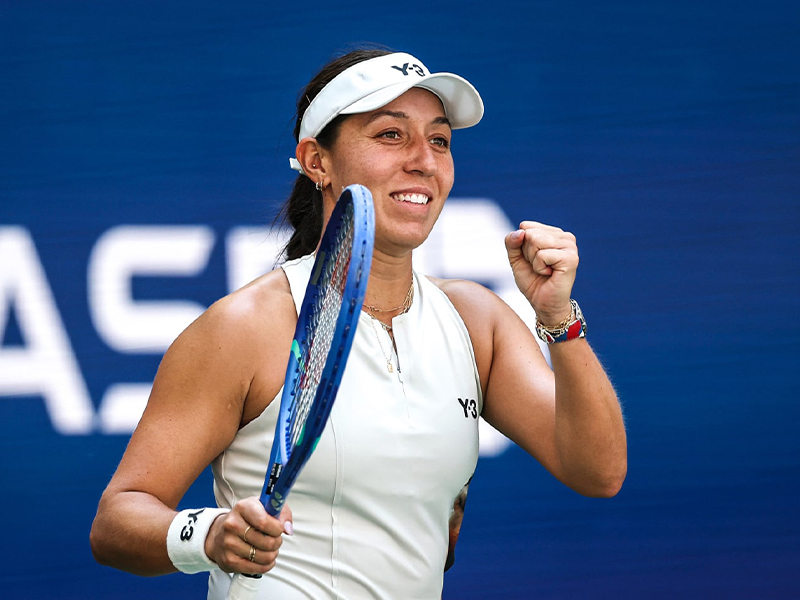
Jessica Pegula
Jessica Pegula, born on February 24, 1994, in Buffalo, New York, is a remarkable tennis player whose journey to success is a testament to resilience, hard work, and the strength to rise above challenges. Daughter of billionaire parents, Terry Pegula, a businessman who owns the NFL's Buffalo Bills and the NHL's Buffalo Sabres, and Kim Pegula, Jessica's life could have been easier due to her family wealth. However, Pegula chose to carve her own path in tennis, facing many challenges along the way. Despite her privileged background, Pegula’s tennis career was far from easy. She faced numerous injuries early on, including knee and hip surgeries that took her off the courts for months. These physical setbacks threatened to derail her tennis aspirations. At one point, the injuries were so severe that there were doubts about whether she could continue her career. The pressure of constantly rehabilitating and trying to return to form was mentally exhausting. Yet, Pegula’s determination didn’t waver. Rather than succumbing to frustration, she found motivation in her setbacks. Her love for tennis and her desire to prove herself as an athlete pushed her to work harder in rehab and training. Behind Pegula’s comeback was a strong support system. Her parents were pivotal, not just financially but emotionally. Terry and Kim Pegula have always supported their daughter’s dreams, ensuring she had access to top-notch coaches, trainers, and physiotherapists. Their unwavering belief in her abilities was a constant source of encouragement. Apart from her family, Pegula credits her coaching team, which helped her make significant improvements to her game. With a focus on both physical recovery and mental resilience, they prepared her for the intense competition in the WTA circuit. In 2021, Pegula had her breakthrough season. She reached the quarterfinals of the Australian Open, defeating several top players, including Elina Svitolina. This achievement put her on the map as a serious contender in the world of tennis. Pegula’s success continued, and in 2022, she reached her career-high singles ranking in the top 10. Her rise was not just about her technical skills but also her newfound confidence, which allowed her to play with greater consistency. Despite her physical recovery, Pegula’s mental toughness was equally vital. The mental side of her game was tested on multiple occasions, especially as she battled with the public perception of being a "rich girl" in tennis. She had to overcome the assumptions that her success was merely due to her family’s wealth. However, through hard work and perseverance, she gained respect on the court, letting her achievements speak for themselves. Pegula’s mindset transformed over time. She worked closely with sports psychologists to enhance her mental game, learning to focus on the present moment and block out external pressures. This newfound mental clarity allowed her to excel, especially in high-pressure matches. Jessica Pegula continues to be a force to be reckoned with on the WTA Tour. She recently reached the semifinals of the US Open, displaying her trademark powerful groundstrokes and tactical intelligence. Pegula’s growth as a player is evident, and her latest achievements show she’s only getting better. Beyond her tennis career, Pegula is also involved in philanthropy. Inspired by her mother’s life story, she has been vocal about supporting women in sports and entrepreneurship. This passion led her to launch a skincare line, further cementing her identity beyond just tennis. Jessica Pegula’s journey is not one of privilege but of perseverance. Her success is a result of countless hours of hard work, overcoming injuries, and mental barriers, while also using the resources available to her wisely. She’s proven that no matter where you come from, grit and determination are key to achieving greatness.