
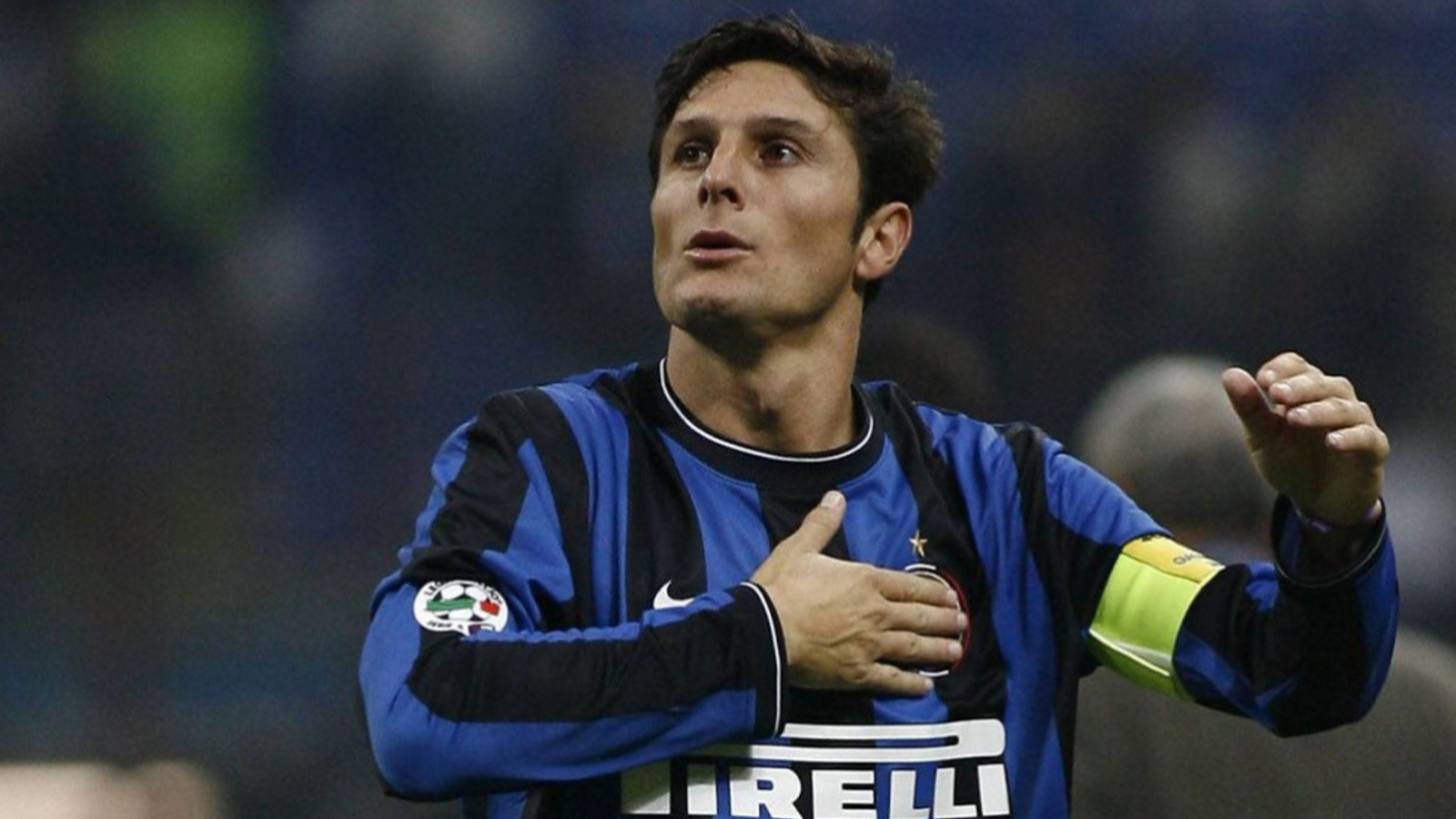
Javier
Zanetti
A symbol of resilience and leadership on and off the pitch
The Roots
Born in Buenos Aires, Zanetti grew up in a modest neighborhood where football was not just a game but a way of life. From a young age, he showed natural athletic ability, often playing in local streets and small clubs, where he developed the discipline and work ethic that would define his career.
The Struggle
Despite his talent, Zanetti's early career in Argentina was marked by the challenge of breaking into professional football at a time when competition was fierce. His move from Talleres de Remedios de Escalada to Banfield demanded constant adaptation and an unwavering commitment that many overlooked in young players.
"Throughout my career, I have always done everything with passion."
The Turning Point
The defining moment came in 1995 when Zanetti transferred to Inter Milan. The initial pressure of adapting to European football, language barriers, and tactical demands tested his resolve. His debut season under manager Roy Hodgson was challenging, but Zanetti’s consistent performances gradually silenced doubts and earned him a permanent place in the squad, marking the start of a legendary tenure.
The Rise
Zanetti’s rise was built on relentless discipline and versatility, seamlessly adapting between full-back and midfield roles. Over two decades at Inter Milan, he evolved into a captain revered for his professionalism and leadership. His ability to perform consistently in high-stakes matches, including UEFA Champions League and Serie A contests, underscored a career defined not by flash but by steadfast contribution. His role in Inter's historic treble win in the 2009–10 season remains a testament to his influence on and off the pitch.
Professional debut with Talleres de Remedios de Escalada in Argentina.
Transferred to Club Atlético Banfield, showcasing his adaptability.
Joined Inter Milan, beginning a 19-year career at the club.
Captain of Inter Milan during the historic UEFA Champions League, Serie A, and Coppa Italia treble.
Retired from professional football after finishing his playing career at Inter Milan.
What position did Javier Zanetti play?
Javier Zanetti primarily played as a full-back but was also known for his versatility in midfield.
Which club did Zanetti spend the majority of his career with?
Zanetti spent 19 years at Inter Milan, where he became a club legend.
Did Javier Zanetti win major titles during his career?
Yes, notably he captained Inter Milan to a historic treble in the 2009–10 season.
What role does Zanetti have post-retirement?
He serves as Vice-President of Inter Milan and is active in philanthropic efforts through his foundation.
How did Zanetti influence grassroots football?
Through his foundation and public work, Zanetti supports youth development and opportunities for underprivileged children.
Trending Stories

Anthony Gordon
Born on 24 February 2001 in Liverpool in a working-class neighbourhood, Anthony Michael Gordon entered the world with a dream. One that many children in football-mad Liverpool silently nurture. His parents, Nadine Gordon and Keith Gordon, can hardly have imagined just how high their boy would climb, starting from street games in Kirkdale to ripping defences in the Premier League. Anthony grew up in a humble household. His family was supportive, but resources were limited. Nadine and Keith sacrificed much time, money, comfort to fuel his passion for football. Keith often coached Anthony in the evenings, after work, while Nadine drove him to training and matches. Their belief never wavered, even when the path ahead looked uncertain. Despite their support, Anthony’s early journey was not easy. He began at the grassroots club Whiston Juniors, then spent time on the books of Liverpool FC as a youngster. But when that door didn’t open, he had to pivot. He joined the academy of Everton FC at age 11 - a significant step. That change meant adapting to new environments and proving himself all over again, but Anthony’s resilience shone through. Breaking into professional football is rarely smooth. Anthony made his senior debut for Everton in December 2017, in a Europa League match - an accomplishment that many dream of, but few achieve at the age of 16. Yet for all the promise, there were challenges: long hours of training, waiting for opportunities, moments of doubt, and the pressure of expectations from both club and self. He persevered. Over the years, Anthony gradually earned his place, pushing through youth teams, under-23 matches and substitutes' benches until he became a regular. His growth was steady, shaped by hard work, dedication, and an unquenchable hunger to improve. In January 2023, Anthony made a bold leap: he signed for Newcastle United FC. It was a statement. A chance to push boundaries, fulfil potential, and rewrite his story. At Newcastle, the environment, coaching, and his own commitment came together. The move proved transformational - he began to shine on a bigger stage, demonstrating speed, creativity and attacking flair that quickly caught the eye. But success wasn’t handed on a platter. Even at Newcastle, Anthony faced challenges: adjusting to new demands, high expectations, and pressure. What helped was the network around him: coaches, senior teammates, support staff, and above all, the values instilled by his parents - humility, discipline, and mental strength. Family sacrifices, sleepless nights on training fields, and unwavering belief in him began to pay off. His rise did not stop at club level. With notable performances, he earned a call-up to the senior squad of England national football team. In March 2024, Anthony made his debut against top opposition. It was a moment that vindicated years of struggle, rejection, injury risks, and constant competition. Today, Anthony Gordon stands as proof that talent alone is not enough. What matters is the journey: humble beginnings, persistent effort, belief, support, resilience and seizing opportunities when they arrive. His story resonates deeply especially for young players dreaming big but lacking access, connections, or resources. For a platform like 8lete - which aims to nurture young athletes, guide their growth and offer supportive structures. Anthony’s journey offers powerful lessons. 8lete can provide mentorship, training plans, mental coaching, and emotional support that mirror what Nadine and Keith gave Anthony. 8lete can bridge gaps for those whose families might not afford expensive training, helping them sharpen both skill and mindset. In a world where many abandon their dreams due to lack of support or guidance, 8lete can be the missing pillar - offering structured pathways, peer support, coaching, and motivation. If a boy from working-class Liverpool, with humble roots and loving parents, can rise to shine on the world stage, then thousands like him elsewhere around the globe.
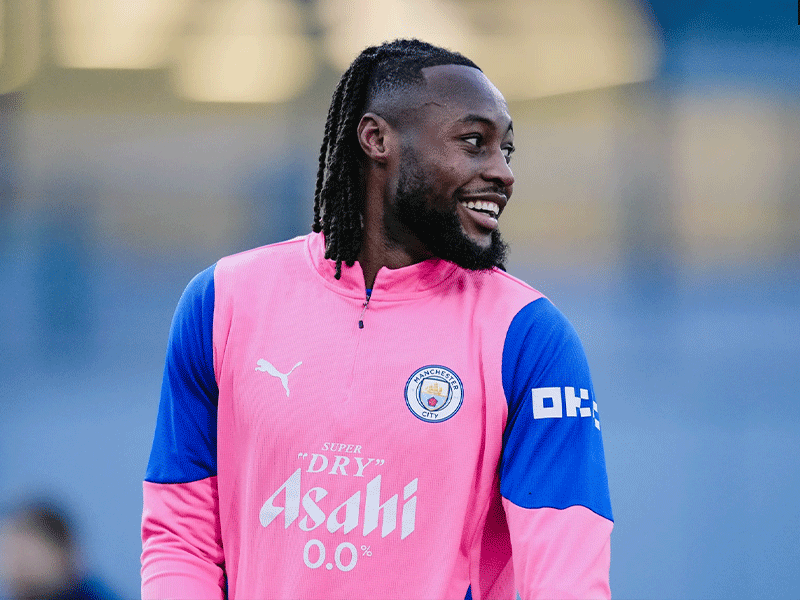
Antoine Semenyo
Born on 7 January 2000 in London, England, Antoine Serlom Semenyo carries the hopes of Ghanaian heritage through his father, and European roots through his mother. His father, Larry Semenyo, was once a midfielder for Okwawu United in Ghana’s domestic league, while his mother holds French nationality. Growing up in a family with deep football roots, Antoine also has a younger brother, Jai Semenyo, who has followed in his footsteps into professional football. From a young age, Antoine played grassroots football in South London. He wasn’t part of any high-profile academy rather, he played in local Sunday-league teams and for lower-tier youth clubs. This early path, while humble, helped him nurture natural talent and love for the sport. But his early ambitions met harsh resistance. Between the ages of 14 and 15, Antoine faced repeated rejections from top English clubs including Arsenal FC, Tottenham Hotspur, Crystal Palace FC and others. An especially painful moment came after an eight-week trial at Crystal Palace, where he was ultimately told he wasn’t good enough. That rejection hit him hard so much so that he temporarily quit football altogether. During this dark phase, Antoine’s family became his rock. Larry and his wife provided emotional support and encouraged him not to give up on his dream. Their faith in him laid the foundation for his comeback. At 16, summoned by determination and with the encouragement of his parents, he enrolled at the South Gloucestershire and Stroud College (SGS) near Bristol. There, under the guidance of coach Dave Hockaday, and with intense self-training and discipline, Antoine transformed - shedding earlier doubts, reshaping his fitness, and rediscovering his passion. His breakout season at college where he reportedly scored around 50 goals - caught the attention of pro scouts. In 2017 he signed for Bristol City F.C.’s academy. It was a small step, but a meaningful one: from Sunday-league obscurity to structured youth development. After progressing through youth and U23 setups and excelling on loan spells at lower-tier clubs, Antoine made his professional debut in January 2018. At Bristol City, he gradually proved himself. By 2021 he had earned “Young Player of the Year” and started to draw serious interest. In January 2023, he secured a move to AFC Bournemouth for around £10 million - a turning point that would propel him into the spotlight of the Premier League. Internationally, Antoine embraced his Ghanaian roots fully. In May 2022 he received his first call-up to the Ghana national football team (Black Stars). His first international goal came in a friendly before the 2022 World Cup. Representing Ghana was more than just a career milestone - it was a dream rooted in heritage and identity. But perhaps the defining chapter of his journey has unfurled in the 2025-26 season. Under manager Andoni Iraola at Bournemouth, Antoine has evolved into one of the most dangerous wingers in the league. His pace, two-footed finishing, dribbling and athleticism make him a constant threat. As of late 2025, he has already scored six goals and provided three assists - directly involved in over 80% of his team’s Premier League goals this season. Experts now consider him a candidate for “Premier League’s most valuable player.” In November 2025, despite facing racist abuse from the stands during a match at Anfield, Antoine responded not with despair but with performance: netting crucial goals and playing with the same intensity. Off the pitch, he has spoken about faith, family values, humility - foundations that have helped him stay grounded through success and adversity alike. Antoine Semenyo’s biography is not just of talent, but of resilience, reinvention, and faith. He transitioned from a rejected trialist at 15, a college footballer uncertain of his future, to a Premier League star representing his ancestral homeland. Throughout, his family especially his parents played a vital role. Coaches like Dave Hockaday and mentors at Bristol City gave him the structured environment and belief he needed. Loan spells, hard work, strict self-discipline, and refusal to give in to discouragement shaped his character. What his journey means and how 8lete can empower young dreamers At 8lete, we believe in identifying raw passion, nurturing it with structure, and guiding young athletes toward disciplined growth. Antoine’s story exemplifies exactly this. His rise shows that: - Early setbacks don’t define potential. - Family support and rooted identity matter. - Structured training environments and mentorship can transform raw talent. - Discipline, physical fitness, mental resilience, consistent work ethic can overcome early rejection. - Opportunity often comes to those who persist, adapt, and believe in themselves. For young players - whether in Ghana, or anywhere else - 8lete aims to build that supportive ecosystem. We want to offer mentorship, consistent coaching, holistic development (technical, physical, mental), and opportunities to shine when others may have given up. Just as Antoine turned a “no” into a golden “yes,” 8lete stands ready to help turn dreams into reality. Antoine Semenyo’s journey is a testament to grit, humility, and destiny - a beacon for every young athlete hoping to rise beyond circumstances.
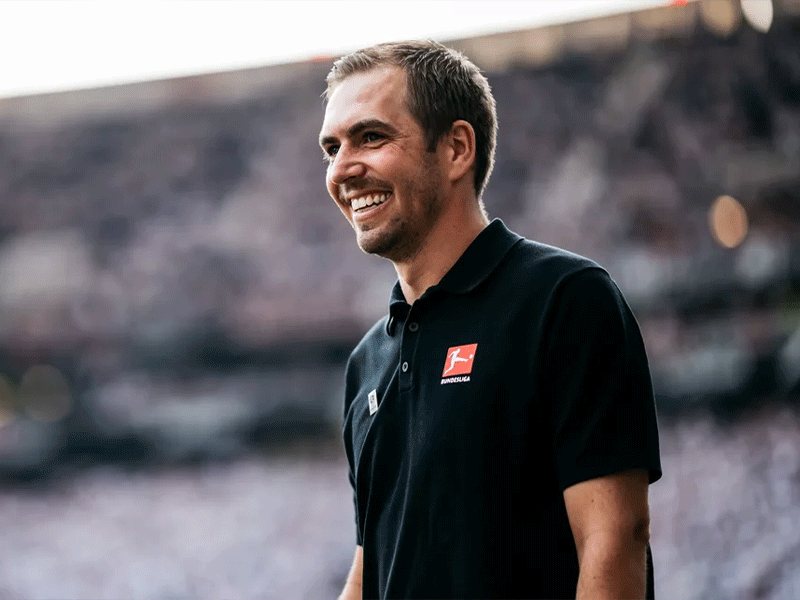
Philipp Lahm
When Philipp Lahm stepped onto the pitch as a young boy, he perhaps did not yet imagine how far his journey would carry him. Born on 11 November 1983 in Munich, West Germany, he grew up in a football-rich environment, one that set the foundation for a career defined by discipline, intelligence and quiet leadership. His parents played a subtle but essential role in that foundation. His father, Roland Lahm, had played amateur football with the local club FT Gern München, and his mother, Daniela Lahm, worked in the youth department of the same club. Although the details of his family’s finances aren’t spotlighted, the raw fact is that Philipp grew up in a typical Munich neighbourhood, loved the game of football, and was surrounded by people who valued sport and community. In his youth, Lahm joined FT Gern at a young age, motivated by his desire to succeed, and by age eleven he had already moved into the youth ranks of FC Bayern Munich - a massive step for any young player. But his journey was far from linear. He faced setbacks: one major one was a torn cruciate ligament just before his full return to Bayern’s first team in 2005, which forced him into rigorous rehabilitation and challenged his patience and mental strength. That moment, like many young players will encounter, highlights the essential truth: talent alone is not enough. The right mindset, the recovery, the humility and willingness to work through injury are just as critical. Lahm also had choices that tested his character. For example, in 2008 he reportedly rejected a lucrative move abroad to join Barcelona because he valued loyalty and wanted to grow at Bayern. This decision reflected something deeper: a commitment to build success where he started, rather than chase fame elsewhere. He trusted his process, trusted his club, and trusted his team. From this we learn the power of aligning purpose with place. During his career, he relied on many helpers: from his youth coaches who recognised his promise; to team-mates and mentors at Bayern and with Germany; to the support of his family and club behind the scenes. His long-time manager Pep Guardiola even called him “perhaps the most intelligent player I have ever coached”. These supporters enabled him to transition from youth prodigy to full-back, to national team captain, to world champion in 2014. Lahm’s rise isn’t about headline-grabbing flamboyance. It’s about consistent excellence, adaptability (he played left-back, right-back and even defensive midfield when needed) and quiet leadership. He became one of Germany’s most capped defenders, led his country to the 2014 FIFA World Cup trophy, and enjoyed a storied club career with over a decade at Bayern Munich. For young players following their dreams, this story offers several key take-aways: - Embrace your environment: Lahm didn’t wait for perfect conditions; he built within what he had (Munich, FT Gern, Bayern youth). - Work through setbacks: Injury, competition, positional change didn’t stop him — they reshaped him. - Align club, role, values: He stayed where he believed his development would thrive. - Leverage your support network: Coaches, mentors, family matter — nobody reaches the top alone. - Adapt and lead, even quietly: Leadership isn’t always loud; consistency, intelligence and trust can be just as powerful. Here is where the platform 8lete enters the picture. For young athletes who are chasing big dreams, 8lete can act as the bridge between raw potential and realised success - much like the network and environment Philipp Lahm found. Through structured training, mentorship, digital tools, club-player connectivity, and personalised pathways, 8lete empowers young athletes to build the kind of foundation Lahm built: a strong support system, clarity of purpose, adaptability, and performance resilience. Imagine a young footballer in Mumbai who sets his sights high and uses 8lete’s ecosystem to access skill development, mental resilience modules, performance tracking, mentor interactions, and peer community. It replicates on a micro-level what Lahm lived on a macro-level. In our increasingly competitive world, talent alone won’t suffice. Lahm’s story emphasises that: mindset, resilience, support, loyalty, and adaptation are equally important. And when you combine those with the right platform (8lete) to guide your growth, you multiply your chances of achieving the dream. As we draw this narrative to a close, remember: on 11 November 1983 a boy was born in Munich with big dreams and through hard work, support, smart decisions and perseverance he became a legend. That same blueprint is available to you now via 8lete. You may be in a different city, under different circumstances, but the principles remain the same. Your journey starts today. Use your support network. Accept the setbacks. Adapt your role. Stay loyal to your growth. Lead by example. And let 8lete help you transform from potential into performance.